
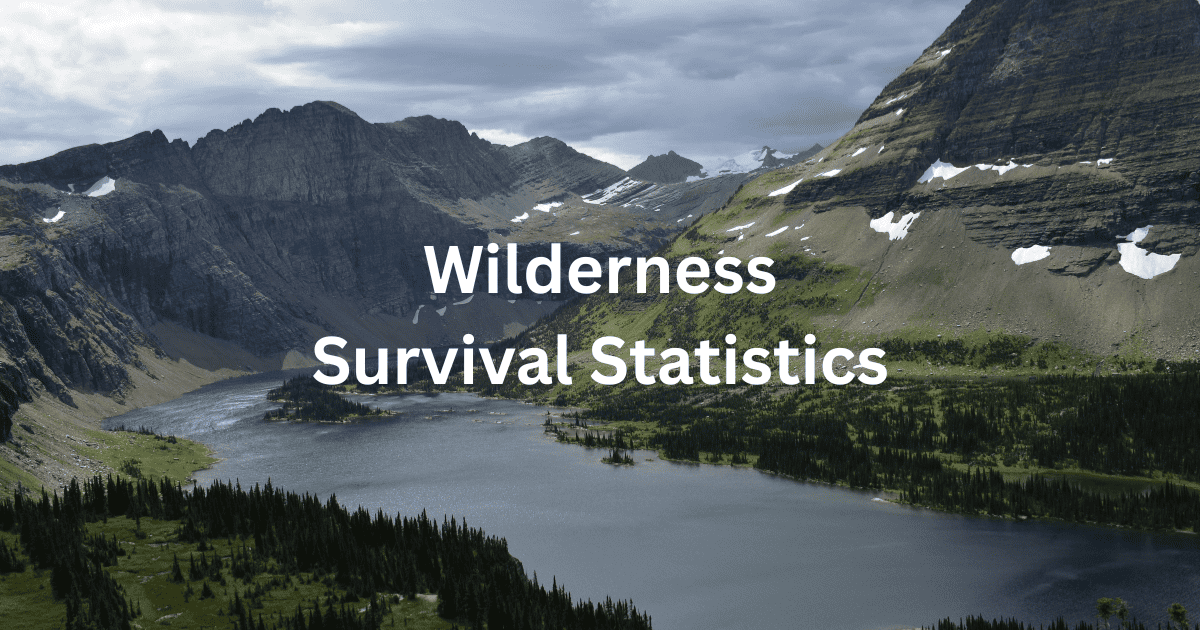
Venturing into the wilderness offers adventure, freedom, and a deep connection with nature—but it also carries inherent risks. Understanding wilderness survival statistics can help hikers, campers, and outdoor enthusiasts make informed decisions and stay safe. From survival rates to common causes of emergencies, this data-driven guide reveals essential insights that could save lives.
Whether you’re an experienced explorer or a beginner, these statistics highlight the importance of preparation, awareness, and resilience in the wild.
To gain deeper insights into safety trends and preparedness, review our in-depth resource on outdoor survival statistics, a valuable companion to this wilderness survival guide.
📊 Key Wilderness Survival Statistics (Quick Overview)
- Approximately 75% of lost hikers are found within the first 24 hours.
- Most survival situations are resolved within 72 hours.
- Humans can survive 3–5 days without water but up to three weeks without food.
- Falls are the leading cause of injury in wilderness areas.
- Exposure to extreme weather is a major contributor to outdoor fatalities.
- Proper survival gear significantly increases rescue and survival chances.
- Panic and poor decision-making are among the most common survival mistakes.
🧭 Survival Rates in the Wilderness
Understanding the survival rate in the wilderness provides valuable insight into real-life outcomes.
- Most lost individuals are rescued within three days.
👉 This emphasizes the importance of staying calm and conserving energy. - Search and rescue teams successfully locate the majority of missing hikers.
👉 Remaining in one location increases the likelihood of being found. - Prepared individuals have significantly higher survival rates.
👉 Carrying proper gear and knowledge improves outcomes in emergencies.
These survival facts demonstrate that preparation and quick decision-making play a vital role in wilderness survival.
🔍 Search and Rescue Statistics
Search and rescue (SAR) operations occur frequently across national parks and remote areas.
- Thousands of SAR missions are conducted annually in the United States.
👉 This highlights how common outdoor emergencies can be. - The first 24 hours are the most critical in rescue operations.
👉 Early reporting and preparedness increase survival chances. - Navigation errors are a leading cause of rescue incidents.
👉 Maps, compasses, and GPS devices can prevent most emergencies.
These search and rescue statistics underscore the importance of planning and communication before heading outdoors.
🌎 Survival Rates by Environment
Different environments present unique challenges and risks.
🌲 Forest Environments
- Dense vegetation can disorient hikers and make navigation difficult.
- Access to water and shelter often improves survival prospects.
🏜️ Desert Environments
- Extreme heat and dehydration pose the greatest threats.
- Survival without water can drop to as little as one to two days.
🏔️ Mountain Regions
- Falls, altitude sickness, and sudden weather changes are common hazards.
- Proper gear and experience are essential for safe travel.
❄️ Cold and Snowy Conditions
- Hypothermia is a leading cause of death in cold climates.
- Insulation and shelter significantly improve survival rates.
These wilderness survival statistics reveal that environmental awareness is critical to staying safe.
⚠️ Common Causes of Wilderness Emergencies
Data shows that most survival situations result from preventable mistakes.
- Getting lost due to poor navigation
- Sudden weather changes
- Lack of preparation or survival gear
- Falls and injuries
- Dehydration and exposure
- Overconfidence and risk-taking
Understanding these risks allows outdoor enthusiasts to take proactive safety measures.
🎒 Preparedness and Survival Gear Statistics
Proper equipment can dramatically improve survival outcomes.
- Carrying basic survival gear increases the likelihood of rescue.
- Fire-starting tools are among the most essential survival items.
- Navigation tools significantly reduce the chances of getting lost.
- Emergency shelters help prevent hypothermia and heat exhaustion.
These emergency survival statistics highlight why preparation is the cornerstone of outdoor safety.
🔗 Internal Link: For more insights, read our guide on Outdoor Survival Statistics.
🧠 Psychological Factors in Survival
Mental strength is just as important as physical preparedness.
- Panic impairs judgment and increases risk.
- Calm and rational thinking improves survival chances.
- The STOP method—Stop, Think, Observe, Plan—is widely recommended.
- Positive thinking and resilience are common traits among survivors.
These findings reinforce that mindset plays a crucial role in wilderness survival.
📈 Key Takeaways
- Most wilderness emergencies are preventable with proper preparation.
- Staying calm and remaining in one location improves rescue chances.
- Hydration and shelter are top survival priorities.
- Environmental conditions significantly impact survival outcomes.
- Carrying essential gear increases the likelihood of survival.
- Knowledge and awareness are the most powerful survival tools.
❓ Frequently Asked Questions (FAQs)
What are the chances of surviving in the wilderness?
Most individuals survive when they remain calm, stay in place, and have access to basic resources such as water and shelter.
How long can a person survive in the wild?
On average, a human can survive about 3–5 days without water and up to three weeks without food, depending on environmental conditions.
What is the most common cause of wilderness emergencies?
Navigation errors, lack of preparation, and sudden weather changes are among the most frequent causes.
What is the most important survival priority?
Shelter and water are typically more critical than food in the early stages of survival.
What increases the likelihood of rescue?
Informing someone of your plans, carrying navigation tools, and staying in one location significantly improve rescue chances.
📚 Sources
- National Park Service (NPS) — https://www.nps.gov
- Federal Emergency Management Agency (FEMA) — https://www.ready.gov
- Centers for Disease Control and Prevention (CDC) — https://www.cdc.gov
- National Outdoor Leadership School (NOLS) — https://www.nols.edu
- American Hiking Society — https://americanhiking.org
- Outdoor Industry Association — https://outdoorindustry.org
- U.S. Search and Rescue Task Force — https://www.ussartf.org
- The Mountaineers — https://www.mountaineers.org